

ECHT: Strengthen the traceability of chemical products in the textile sector

Marie Dresse Degiorgi
3 minutes read |


ECHT, an ambitious multi-stakeholder project
ECHT is a project funded by the Northwest Europe region (Interreg NWE) in the framework of several European initiatives aimed at increasing the industry’s circularity and transparency, while reducing its environmental impact: the Ecodesign for Sustainable Products Regulation (ESPR), the Digital Product Passport (DPP), and the EU Textile Strategy. Many partners are involved in this project, from research institutions – including the LMDDC – to NGOs and companies in the textile sector.
The ECHT project, "Enable Digital Product Passports with Chemicals Traceability for a Circular Economy," aims to help major stakeholders in clothing and carpet production strengthen chemical traceability of products and prepare for the future implementation of the DPP. These two points are part of the EU strategy for a transition to a circular economy.
ECHT deals with: the value chains of the textile and clothing sector, the flooring sector, and policy makers. It is designed to strengthen the stakeholders' capacities in terms of chemical traceability through guidelines, implementation activities, and advice, gathered on a Knowledge Platform (KP) addressed to SMEs. The goal is to go beyond mere “compliance” by encouraging companies to adopt an innovative, sustainability‑focused approach. In the long run, establishing true circularity in the textile sector would help reduce its environmental and climate footprint.
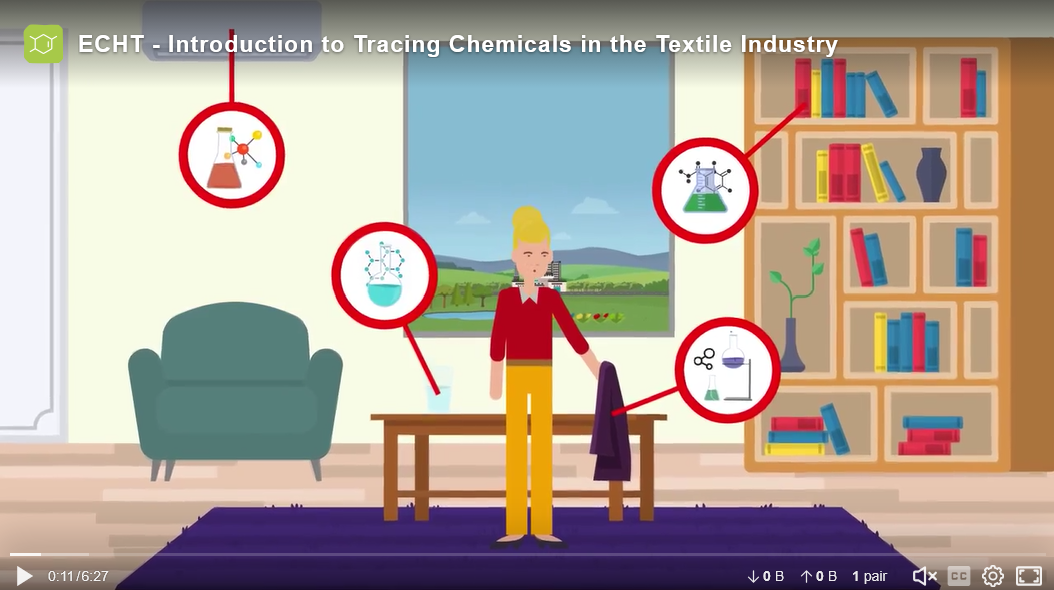
What does LMDDC do?
The LMDDC is proud to participate in this positive-impact project by dealing with the implementation of the Knowledge Platform and an integrated chatbot (or conversational AI assistant) alongside the Luxembourg Institute of Sciences and Technologies.
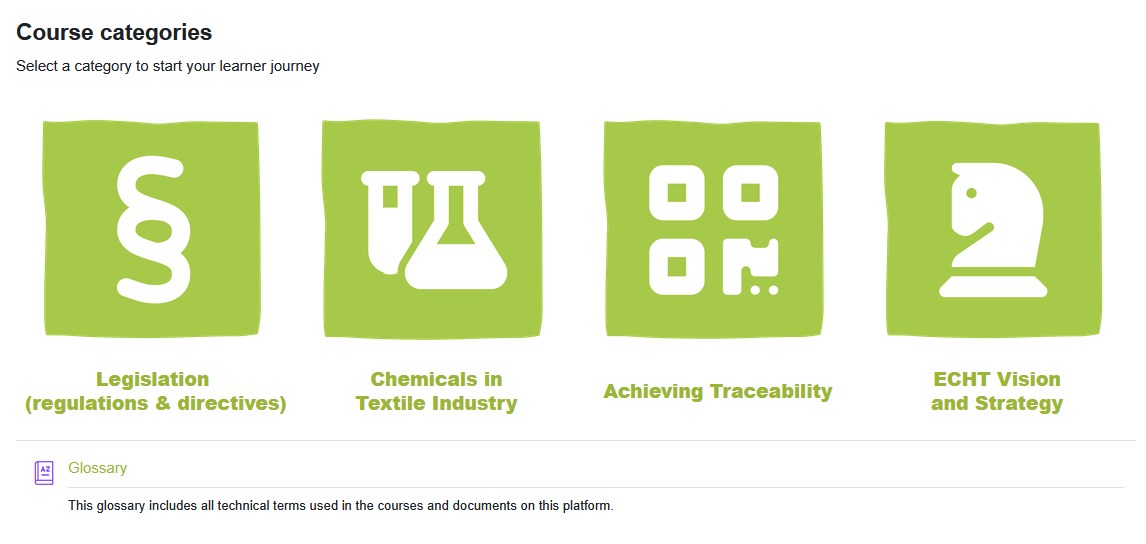
This platform centralizes all the resources built within the ECHT project, as well as external studies related to the traceability of chemicals in textiles. It helps SMEs to better understand the challenges of traceability in the textile production chain, to know their obligations and to identify available solutions. The KP thus gives local stakeholders the means to make a concrete commitment to a more sustainable industry, by placing traceability at the heart of this transition towards greater responsibility.
The chatbot or AI assistant aims to facilitate the navigation of SMEs across the platform. Indeed, the platform currently brings together nearly 150 resources: it is a gold mine of information that requires time to be explored in depth. This assistant thus provides them with targeted answers, directly drawn from the documents referenced on the platform. Powered exclusively by verified content, it always cites its sources, thereby eliminating any risk of AI hallucination. In addition, its code is open source, it does not store any users' data, and it is hosted on a European server, which guarantees users’ privacy. The chatbot was developed using the code of [AI]lice, a chatbot‑creation service developed by the LMDDC specifically for the education sector. Bonus: although the KP mainly contains documents in English, the chatbot is multilingual, so users can ask their questions in their own language.
What’s the latest on the project?
The Knowledge Platform was made public at the end of 2025 and will continue to be refined through 2026. The Consortium therefore updates it frequently with new content and useful resources. Nevertheless, you can already access it via this link: https://www.trace-chemicals.eu/. You will discover detailed information on ECHT, current regulations, and reference scientific articles.
Feel free to use it by creating an account or browsing as a guest, and, most importantly, let us know what you think or send us your suggestions at echt@h‑da.de.

Marie Dresse Degiorgi