

AAA – Augmented Artwork Analysis: Where AI Meets Art History

Pierre de La Celle
4 minutes read |


A Project at the Crossroads of Research and Practice
The University of Luxembourg entrusted us with the technical development of the AAA (Augmented Artwork Analysis) project, a research initiative led by Prof Gian-Maria Tore the Faculty of Humanities, Education and Social Sciences (FHSE). The concept was ambitious: build an art interpretation aid that combines the power of artificial intelligence with the irreplaceable expertise of art historians.
The AAA project as a whole spanned four years. Our role at LMDDC focused on the final delivery phase (18 months) — the moment where research transforms into a concrete, usable product. This is often where the most unexpected challenges arise.
What We Found When We Joined the Project
By the time we came on board, researchers from the ICAR Lab from CNRS(Centre National de la Recherche Scientifique) had already done remarkable work: they had built artificial intelligence models capable of analysing artworks and returning structured data — identification of shapes, dominant colours, composition, styles, and more.
On the human experts' side, the situation was different. Years of in-depth analyses conducted by art historians were scattered across Miro boards — a collaborative whiteboard tool that works well for thinking and brainstorming, but is not designed to produce data that an application can actually consume.
The finding was clear: the AI produced structured data; the human expertise produced unstructured data. For an application to cross-reference both sources, this imbalance needed to be resolved.
Our Approach: Two Complementary Developments
1. The Backend — Structuring Expert Knowledge
The first priority was to make the art historians' knowledge machine-readable. We designed and built a collaborative data entry tool that allowed a pool of art history experts to transcribe and organise the information contained in the Miro boards, following a data model consistent with the outputs produced by the ICAR AI models.
This involved:
- Analysing the Miro boards to understand the implicit structure behind the expert analyses
- Designing a shared data schema capable of accommodating both AI results and human annotations
- Building a clear, ergonomic input interface for non-technical users
- Developing an API exposing this data in a standardised format
2. The Frontend — An iOS Tablet Application
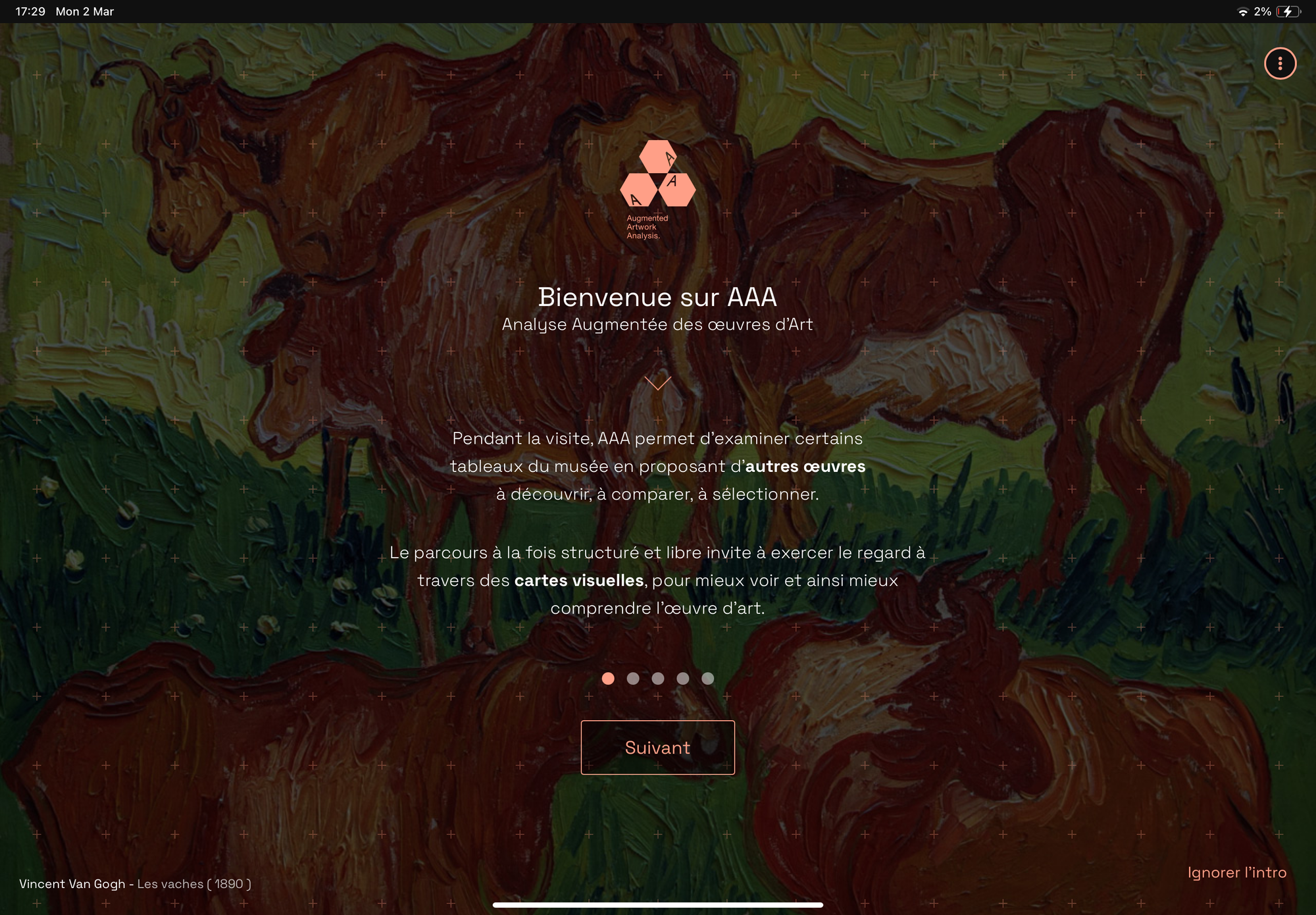
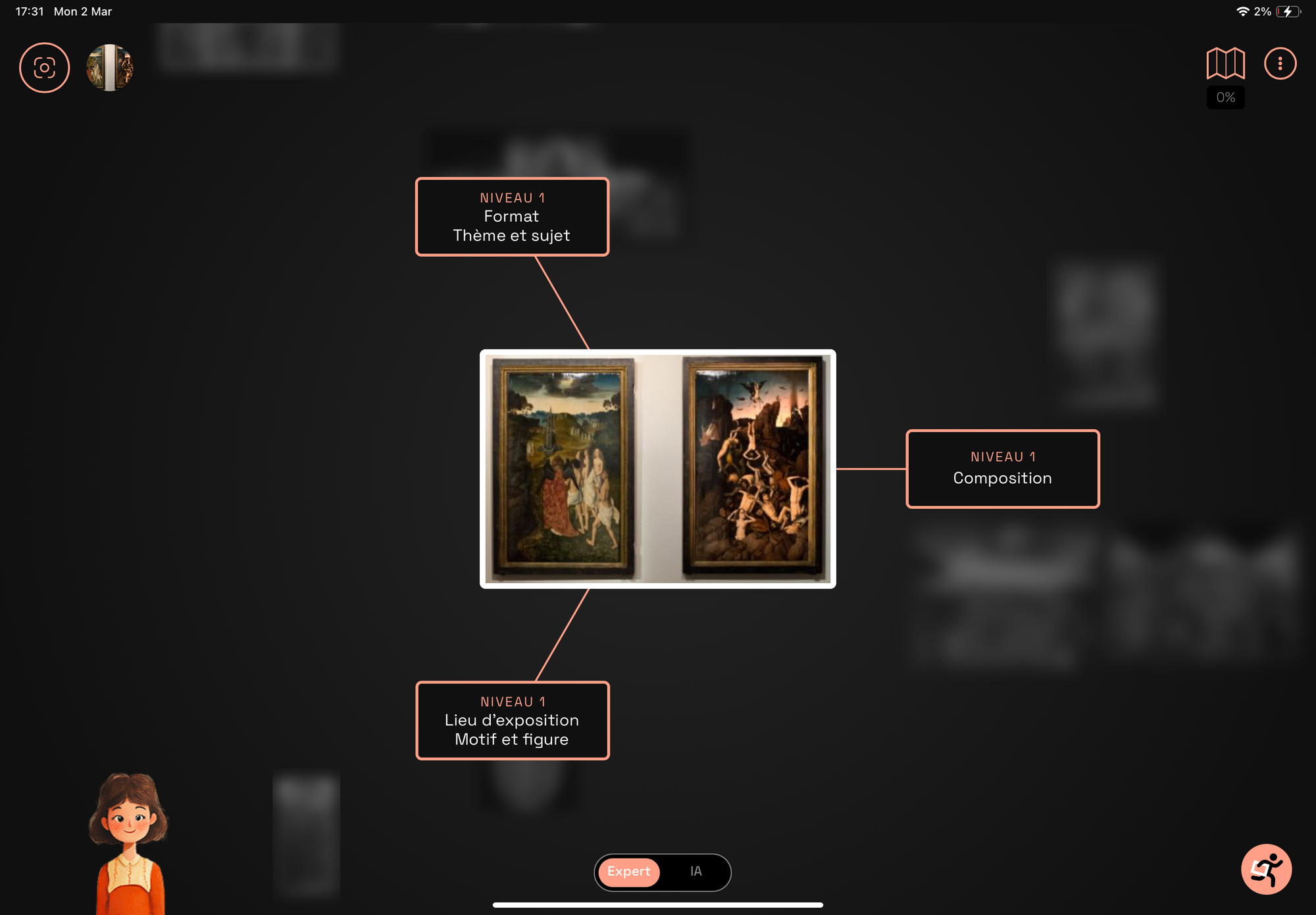
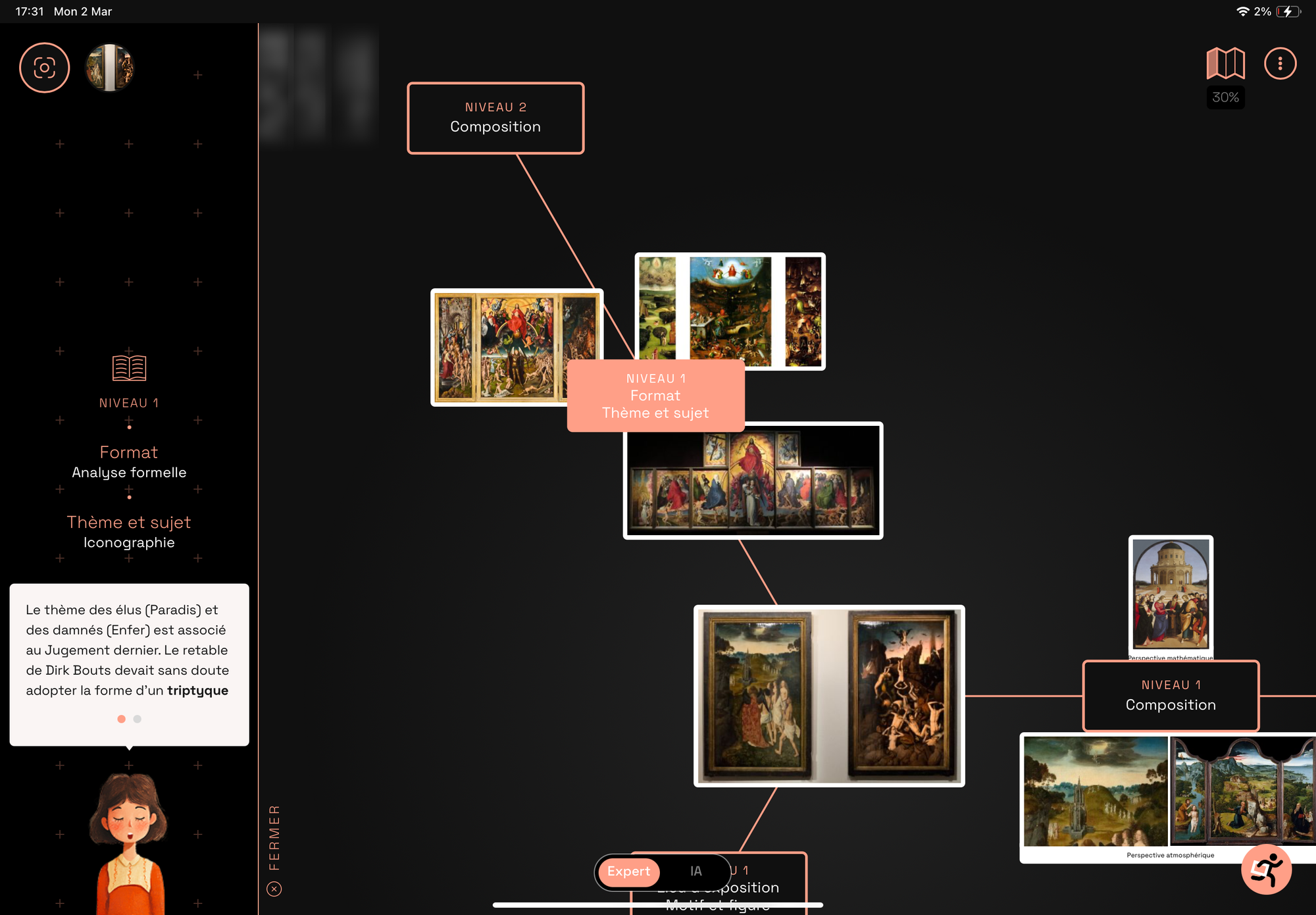
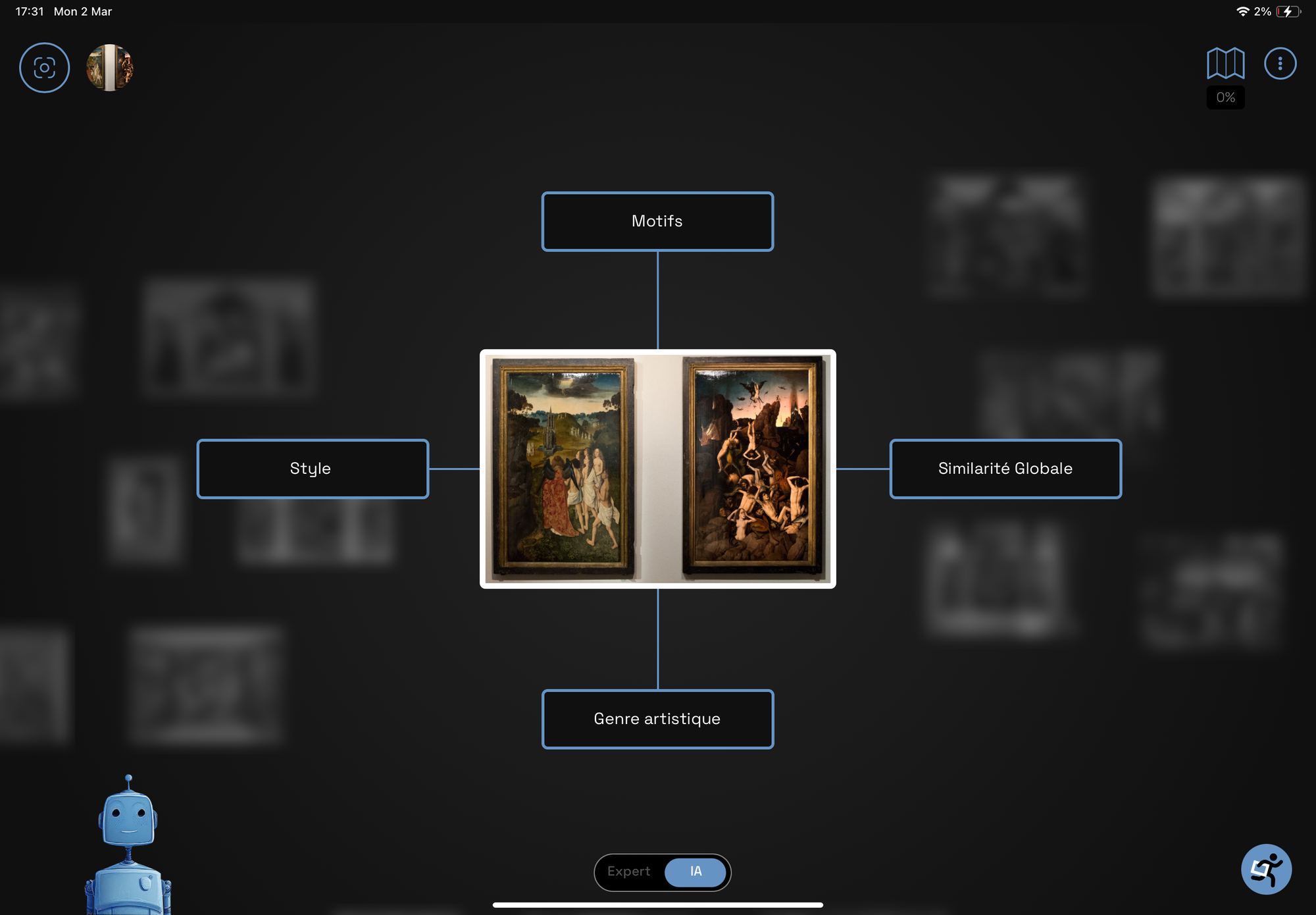
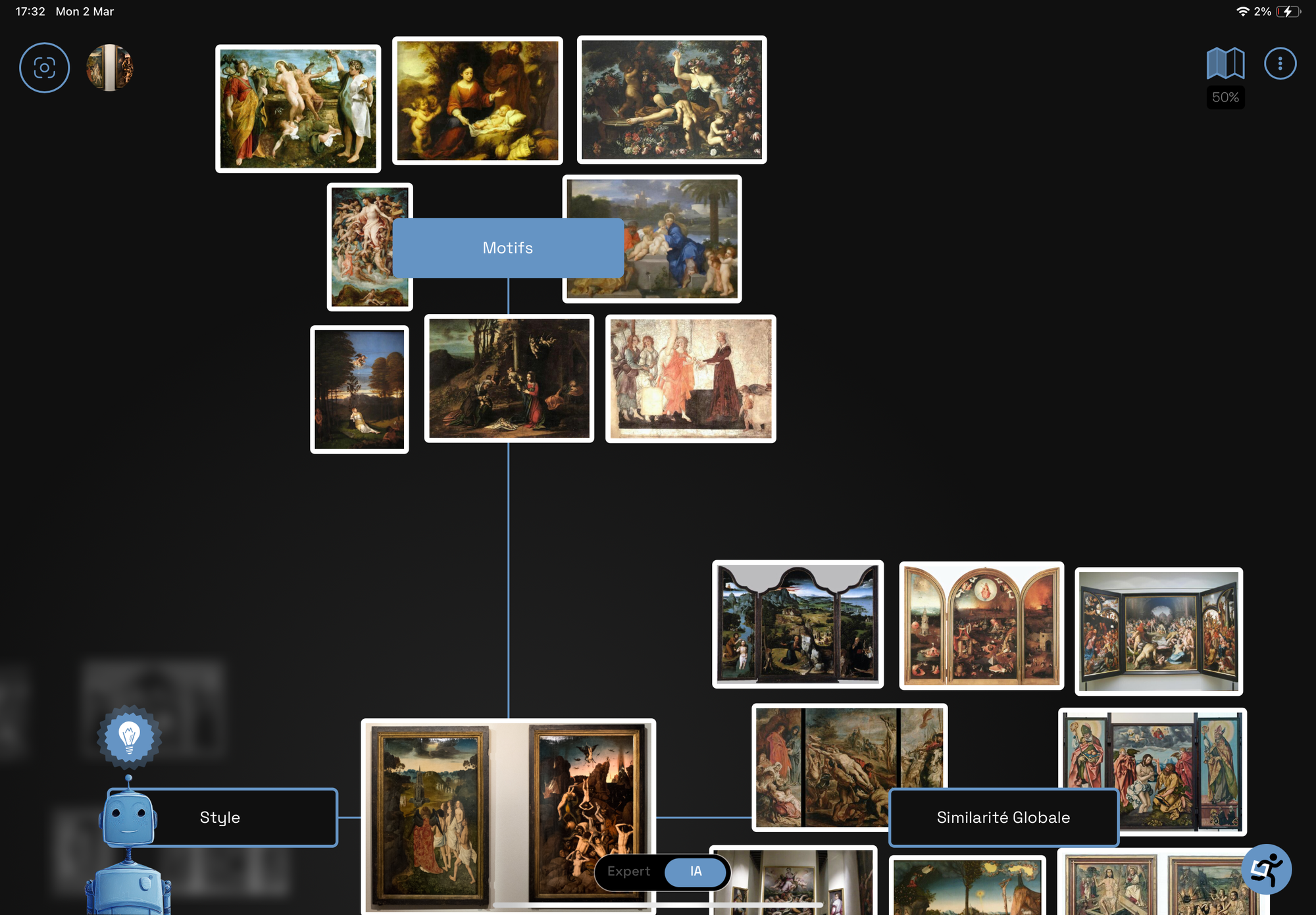
Once both data sources were harmonised, we developed the final application: an iOS app for tablets, designed to be used in front of artworks — in museums, galleries, or classrooms.
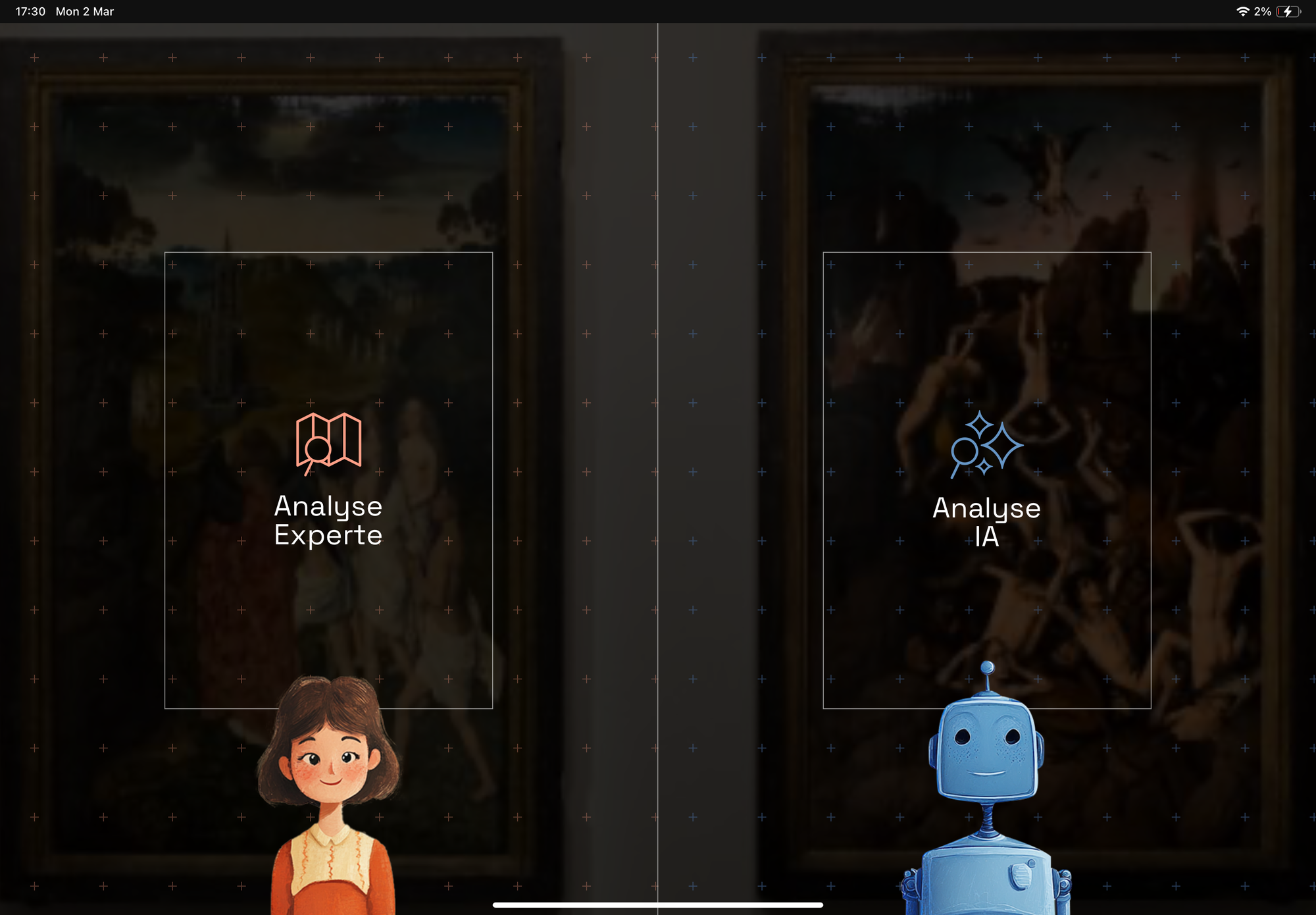
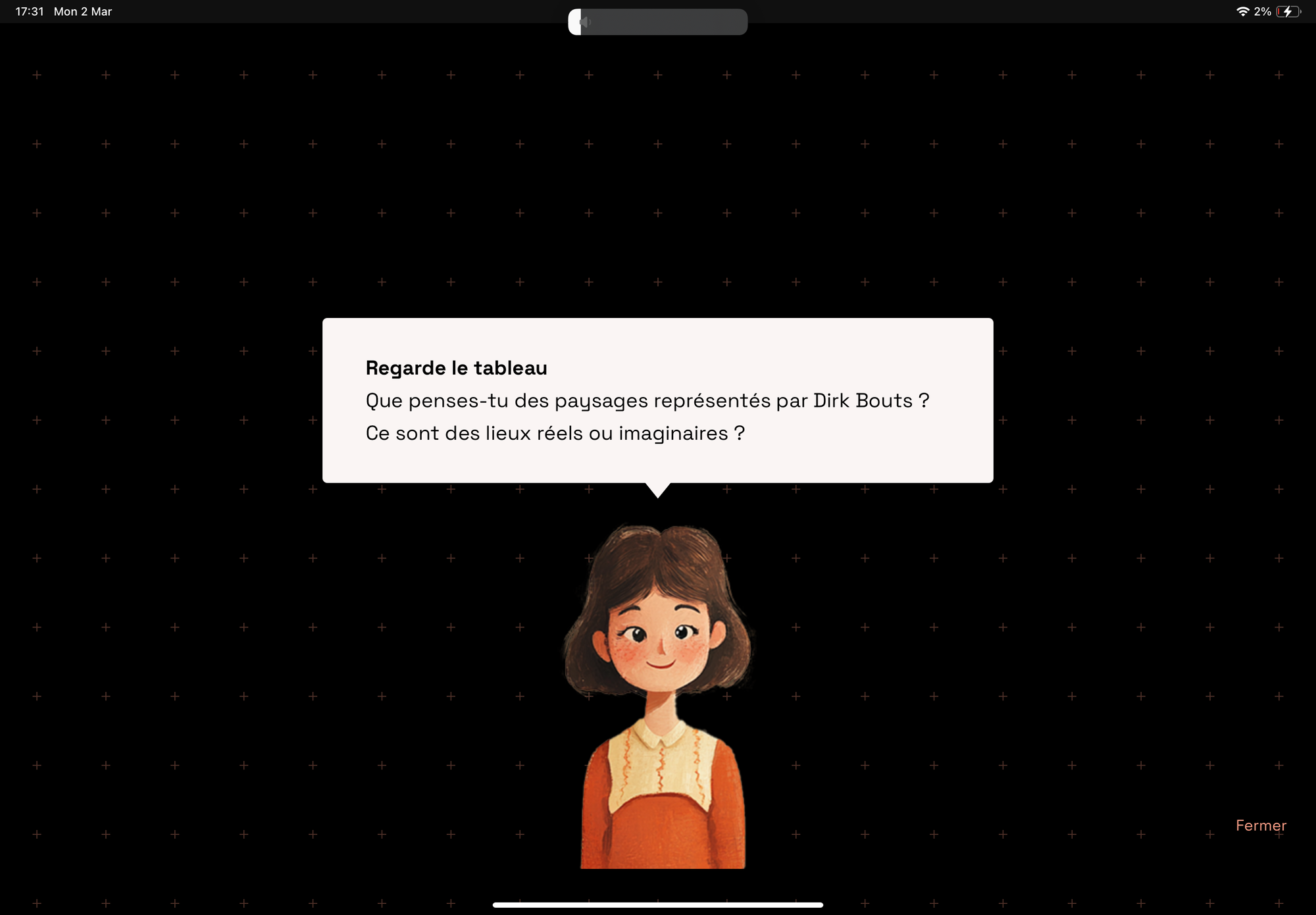
The application allows users to view an artwork and browse, side by side, the analyses produced by the artificial intelligence models and those contributed by human experts, creating a genuine dialogue between the machine and the cultivated eye.
Technology Choices
For this application, we chose a proven stack well suited to the project's constraints:
- Apache Cordova as the iOS packaging framework, enabling standard web development while targeting the Apple platform
- Vue.js for building the user interface, with its reactivity and modularity well adapted to a data-rich application
- A PHP API on the backend to serve expert analyses
- A Python FastAPI interface with the ICAR AI models
Cordova was a natural fit for its ability to wrap a web application inside a native iOS container, reducing development complexity while meeting the requirements of the target platform (iPad tablets used in research and cultural mediation contexts).
Lessons from an Applied Research Project
This project illustrates a recurring challenge when joining a research project in its final phase: the data exists, but it isn't yet "application-ready". Researchers naturally produce knowledge in forms suited to their own process — notes, visual boards, documents — not necessarily in forms ready to be consumed by software.
Our added value was precisely in bridging that gap: designing the right data structures, creating the right input tools, and assembling everything into a coherent user experience.
A Meaningful Result
The AAA project is a fine example of what academic research and technical expertise can achieve together. By combining visual analysis algorithms and the insights of subject-matter specialists, the application opens new possibilities for cultural mediation, art history education, and digital humanities research.
We are proud to have helped bring this project to life, and we thank the University of Luxembourg for their trust.
Do you have a project at the intersection of research and software development that is helping Education? Let's talk →
Pierre de La Celle
Pierre is a seasoned engineer who has extensive experience working in the web and digital advertising. He has successfully designed, developed and operated multiple of web platforms and products.