

When learning gets hands-on: EdTech Speed Dating with Things

Györgyi "Gira" Szakmár
5 minutes read |

We were really excited to welcome everyone to the sixth LMDDC workshop around a topic that feels more and more important today: reconnecting learning with physical experiences, curiosity, experimentation, and interaction beyond the screen. With “EdTech Speed Dating with Things”, the goal was not simply to present technologies, but to create a shared space where educators, students, makers, and creative technologists could explore together how physical and digital experiences can support learning in different ways.
The preparation
But let’s step back for a minute and talk about the time before the event. Weeks before “EdTech Speed Dating with Things”, the whole LMDDC space slowly turned into this strange but wonderful playground of controlled chaos. The team had to constantly watch their step not to accidentally kick a little car driving around the office, while others could suddenly be spotted in the cafeteria with welding pens, testing concepts, fixing objects, playing board games, or assembling last-minute creations together.
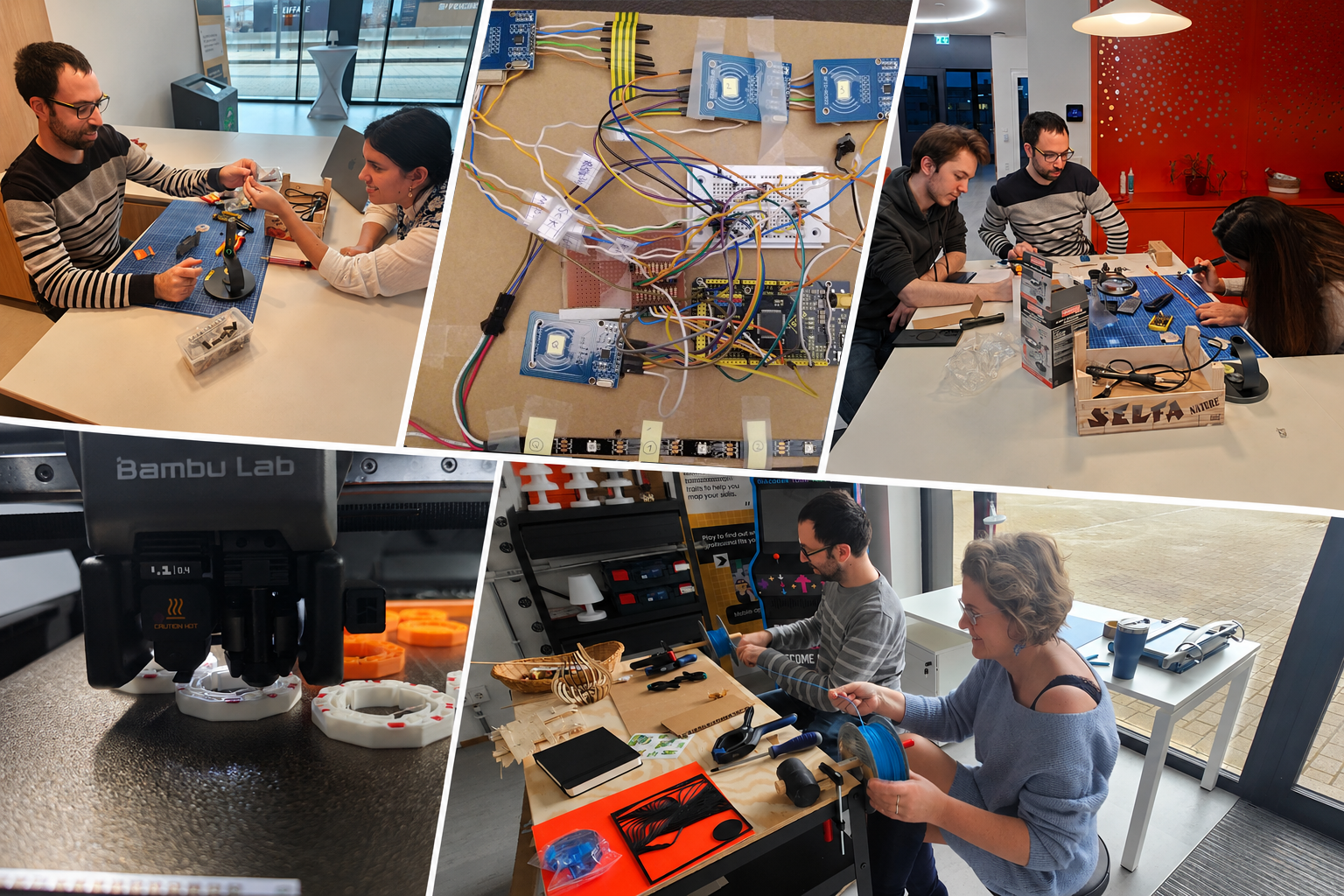
At the same time, the workshop space itself became alive with the sounds and smells of making. You could hear the constant rhythm of the 3D printers running in the background, the air cleaners humming, the laser cutter working, tools moving from one table to another, and every now and then the smell of burned wood drifting out from the workshop area. It felt less like preparing a formal educational event and more like building a temporary creative lab where people were fully allowed to experiment, test, fail, laugh, and try again.
The vibe
Within minutes, you could feel that something was working, not in a forced or over-designed way, but because people were genuinely open, curious, and ready to engage, creating a lively and playful atmosphere where conversations flowed naturally and the whole room carried this light, energetic buzz.
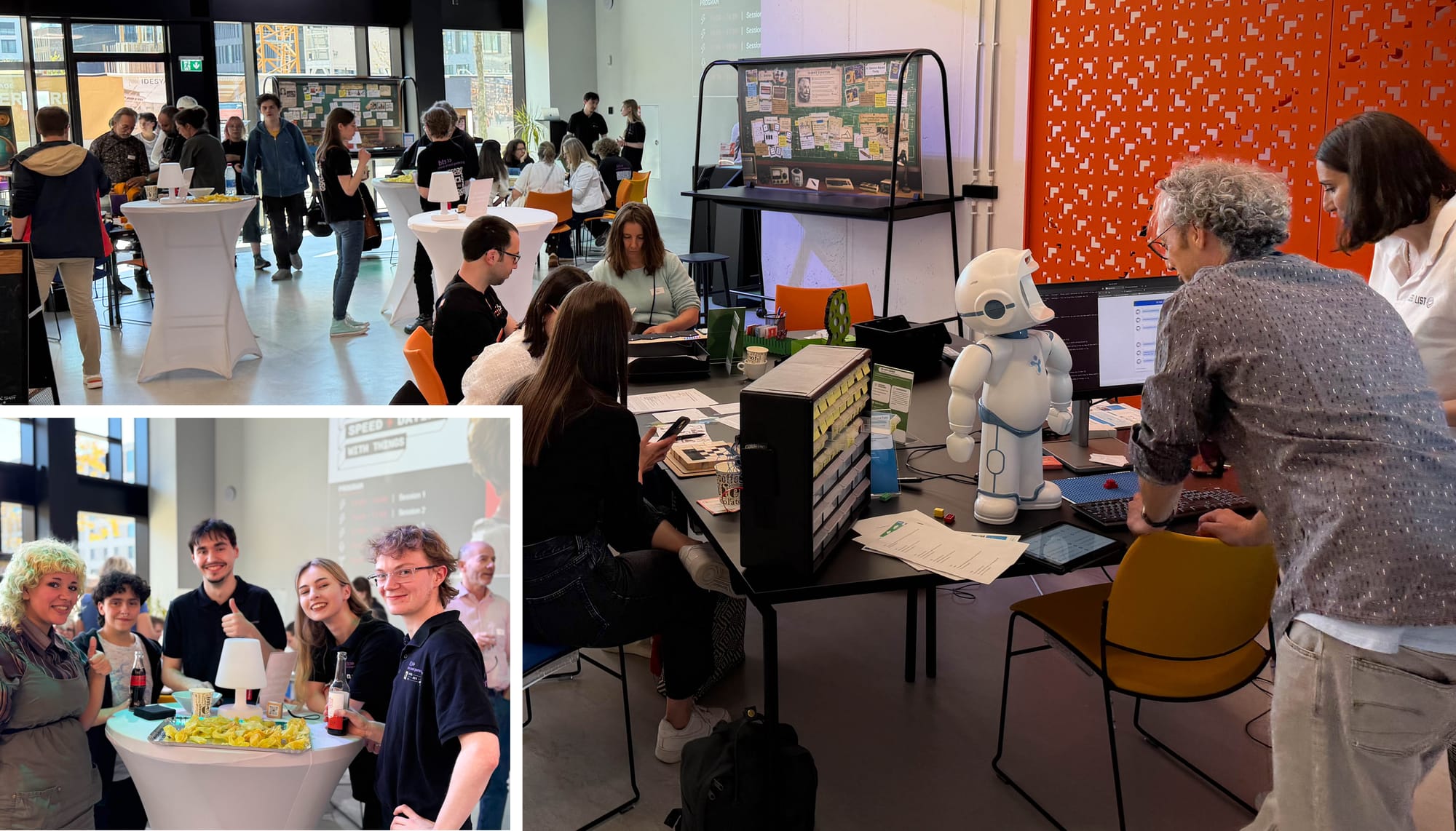
Participants were moving, rotating, picking things up, reacting, laughing, and building on each other’s ideas. That shift alone completely changed the dynamic, making the experience feel much more alive, spontaneous, and memorable.
Our partners
A big part of this came from the mix of people who joined and contributed, bringing very different perspectives that complemented each other in a natural way.
Luxembourg Institute of Science and Technology, represented by Dimitra Anastasiou together with their QT Robot, invited participants into a playful activity combining coding, robotics, and hands-on problem solving, where the robot guided them through spoken instructions to build a small LEGO animal step by step.
A special part of the workshop was also the presence of FabLab M Design from Maizières-lès-Metz, who shared hands-on activities around digital fabrication, coding, laser cutting, and creative making, giving visitors the chance to discover playful and interactive projects like the B.E.E. Biathlon, robotic drawing with modified 3D printers, solar ovens, and their custom-built photobooth. Beyond the activities themselves, Fawzi Kachouri and Marion Didailler brought an incredibly warm, creative, and open energy to the workshop, constantly engaging with participants, sharing ideas, and making everyone feel welcome around the space.
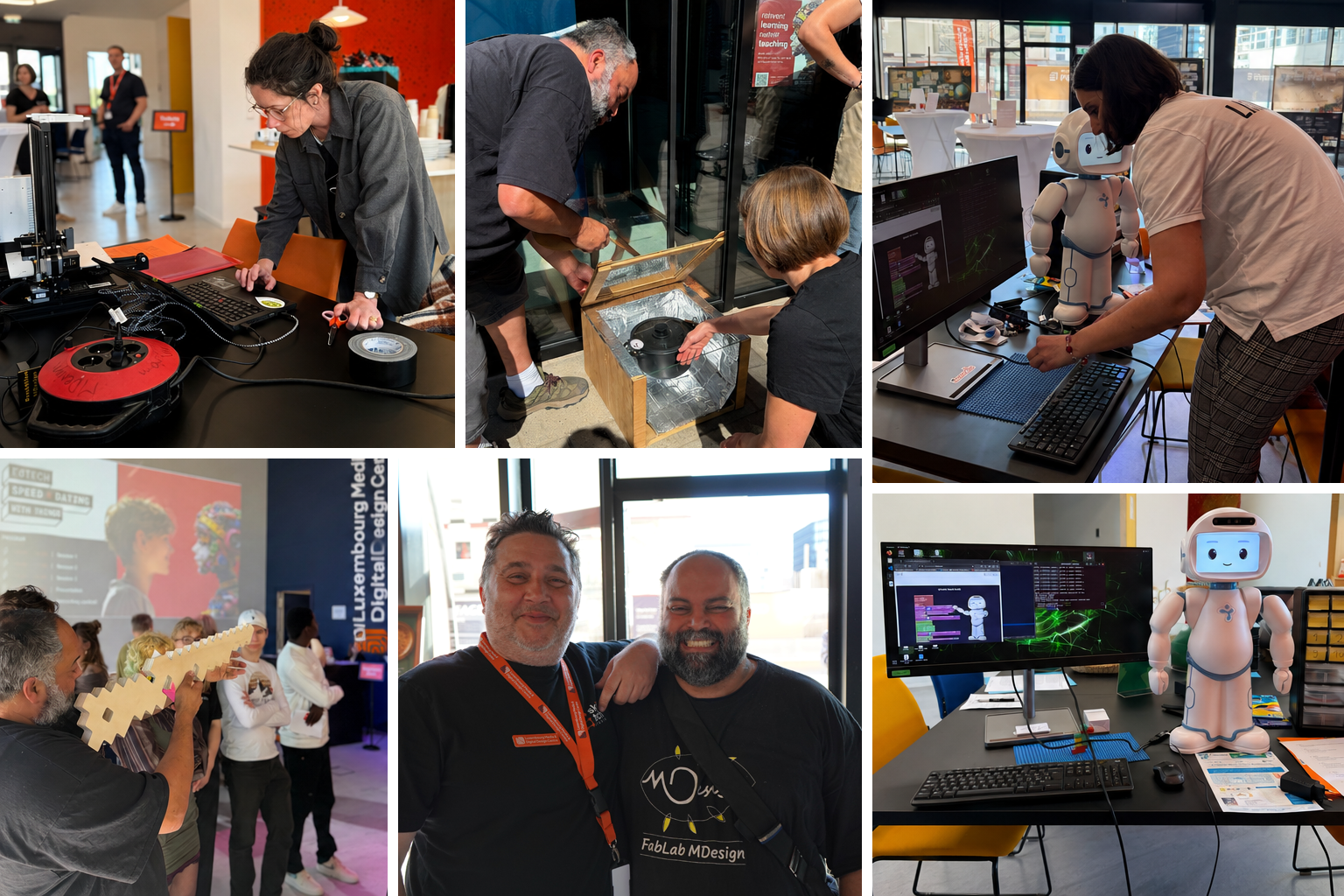
Special thanks to the students from the BTS Game Art and Game Design at Lycée des Arts et Métiers, who brought fresh creative energy to the event and made every exchange more dynamic, curious, and unpredictable in the best possible way. The students not only showcased their own game projects, but also actively helped around the different stands, engaged with visitors, and contributed to the welcoming atmosphere throughout the workshop. Their enthusiasm, creativity, and openness perfectly matched the spirit of the event. A warm thank you to their teacher, Françoise Ahlborn, for her constant support, encouragement, and presence, both for the students and for us, over the years!
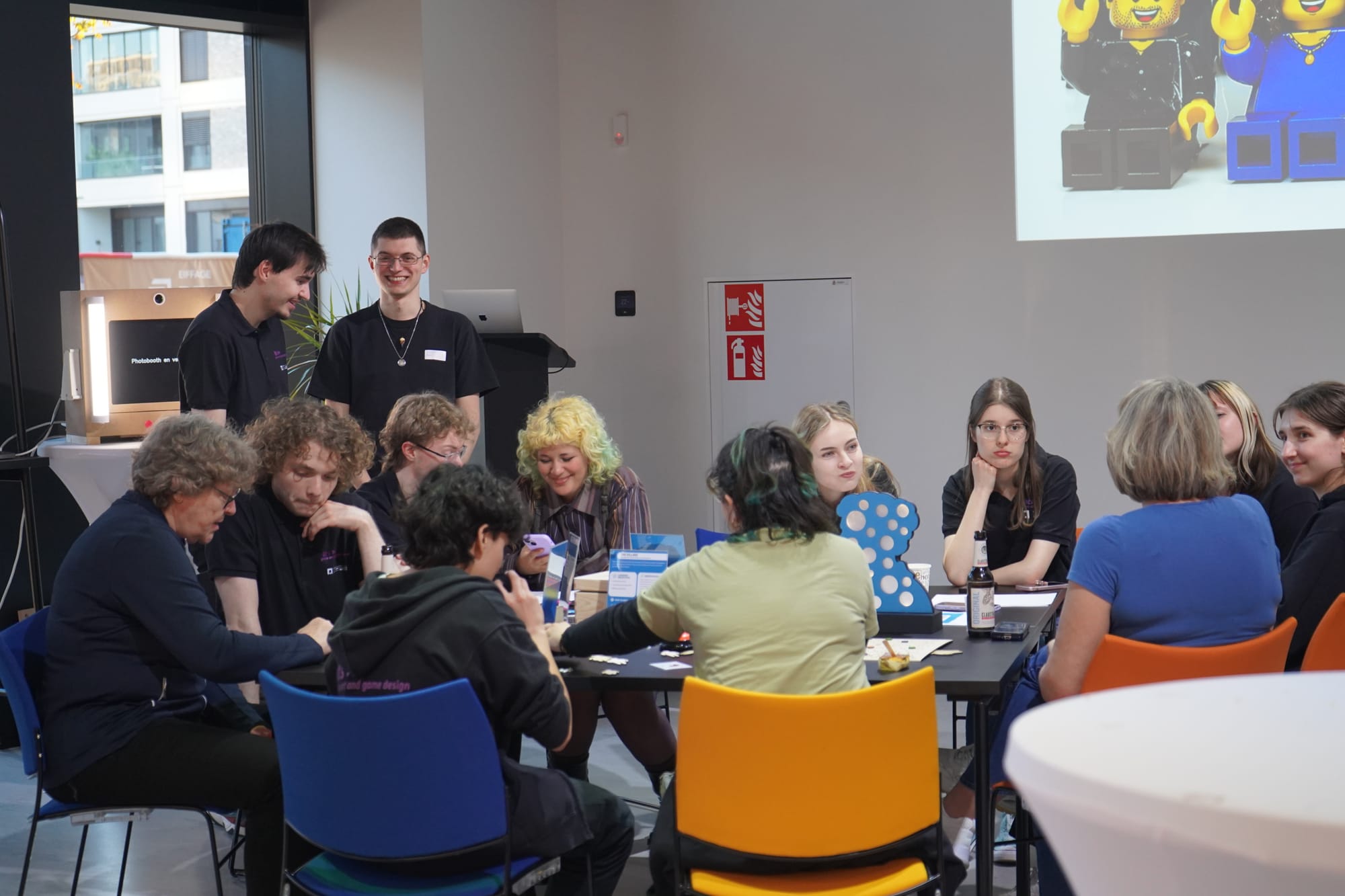
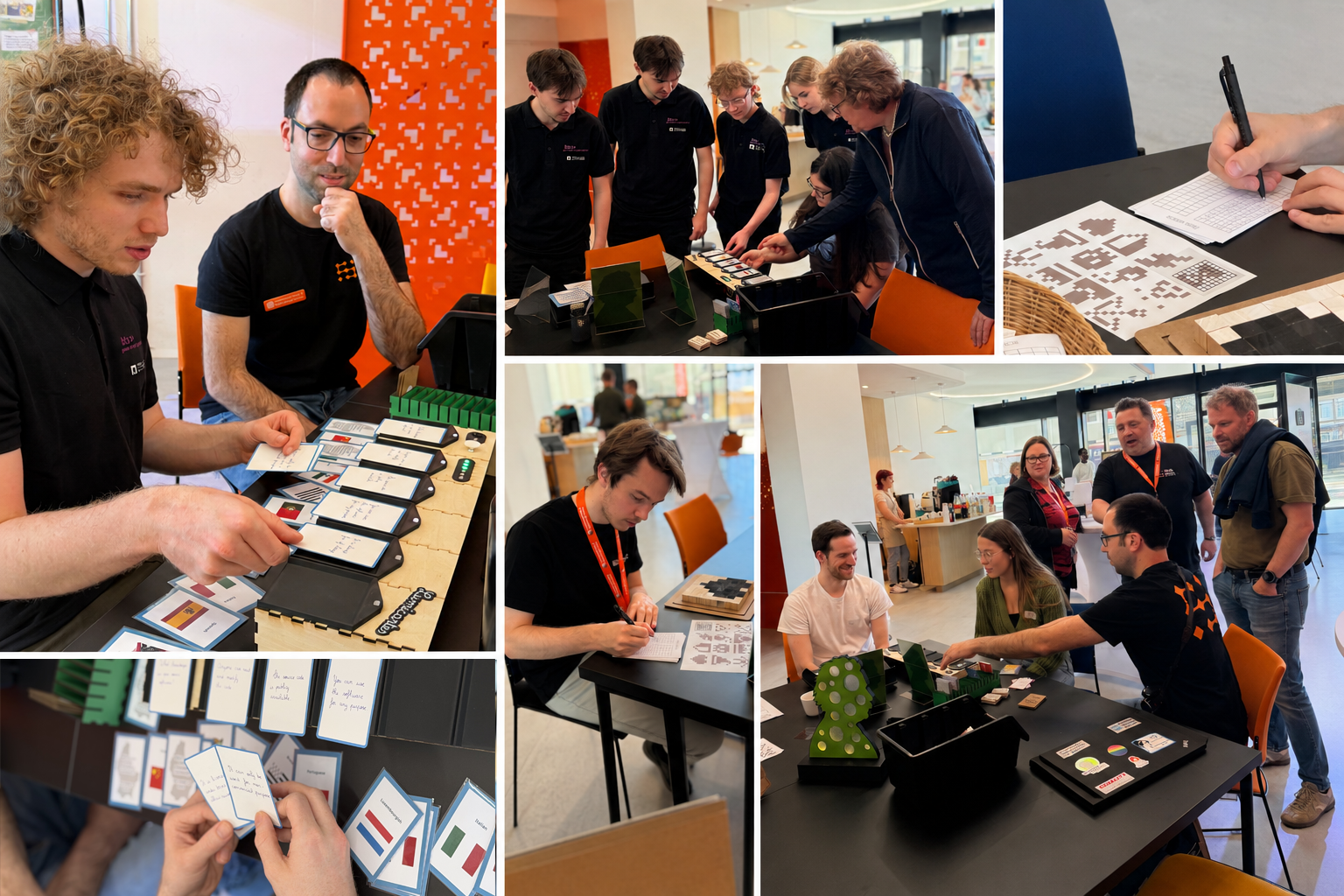
During the workshop, participants rotated between 4 different workstations, each built around a specific topic connected to hands-on, object-based, and phygital learning. Every station explored a different way physical things can support education through experimentation, creativity, collaboration, storytelling, and interaction. Rather than focusing on finished products or demonstrations, the activities invited visitors to test ideas directly, discuss possibilities together, and discover different approaches to learning by doing.
The workstations
The “Talking with Things” booth explored how objects can become a form of language through storytelling, symbols, and physical interaction. Inspired by Maria Montessori and multimodal learning approaches, participants used cards, tactile objects, and collaborative prompts to create meaning together, showing how communication and learning become more intuitive when ideas are grounded in physical experiences.
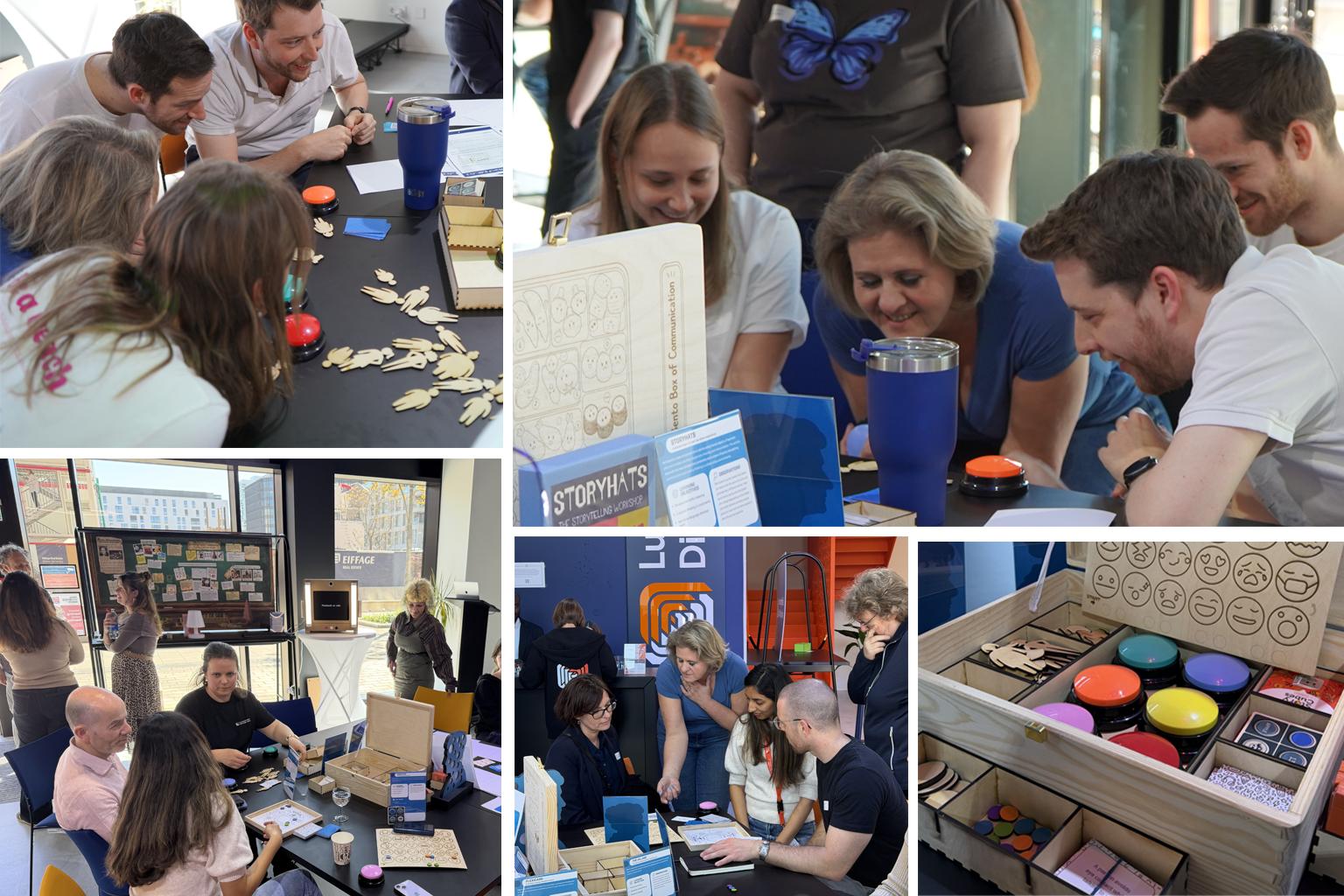
The “Making with Things” booth invited participants to experiment with sound, visuals, and movement through playful artistic and musical activities inspired by Leonardo da Vinci’s hands-on approach to creativity. Visitors tested interactive setups, explored sensory experiences, and discovered how art and creativity can naturally spark curiosity.
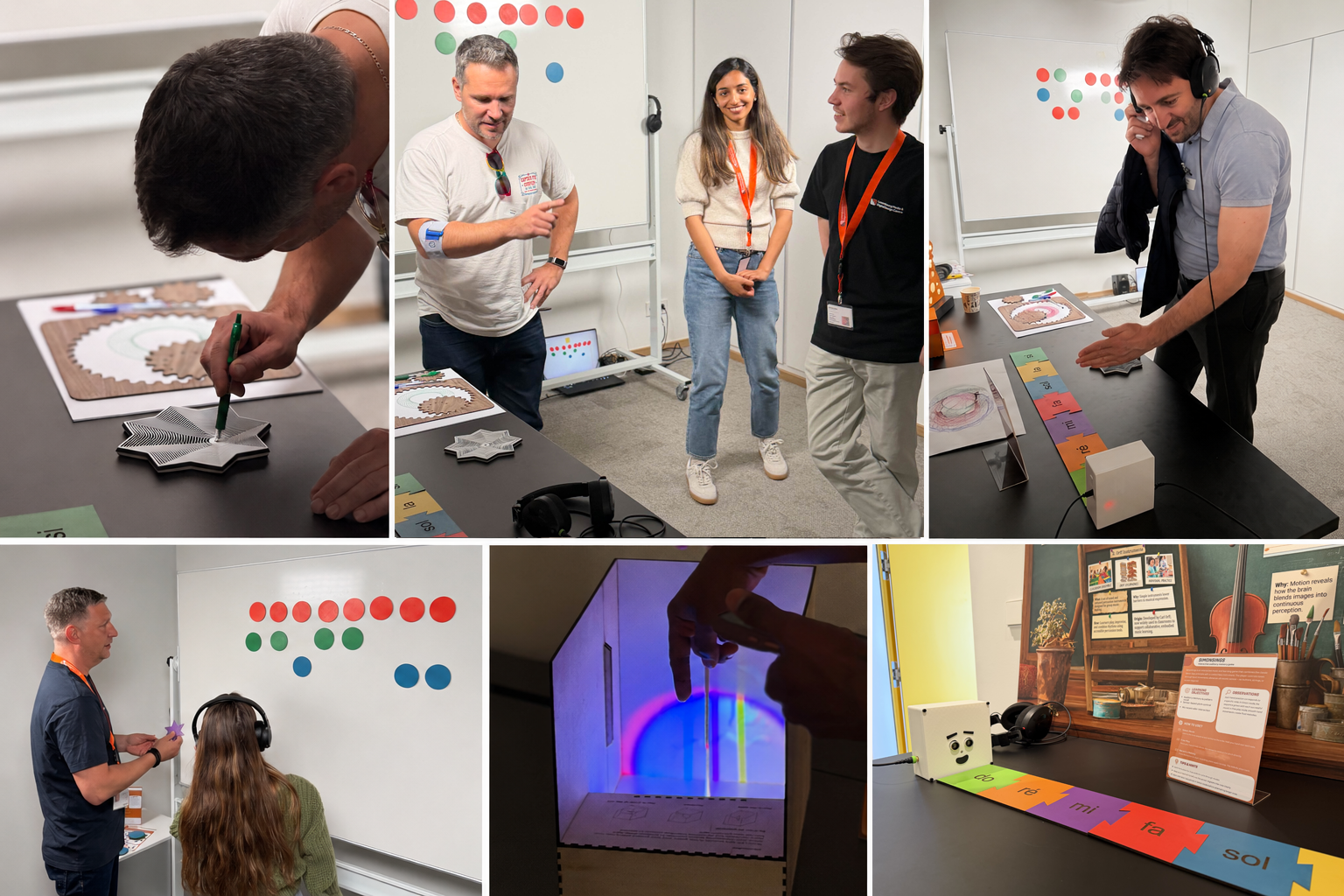
The “Exploring through Things” booth focused on experimentation, observation, and shared discovery. Inspired by Galileo Galilei and inquiry-based learning, participants tested interactive activities together, compared outcomes, and explored how physical tools and experiments can encourage curiosity, discussion, and active participation.
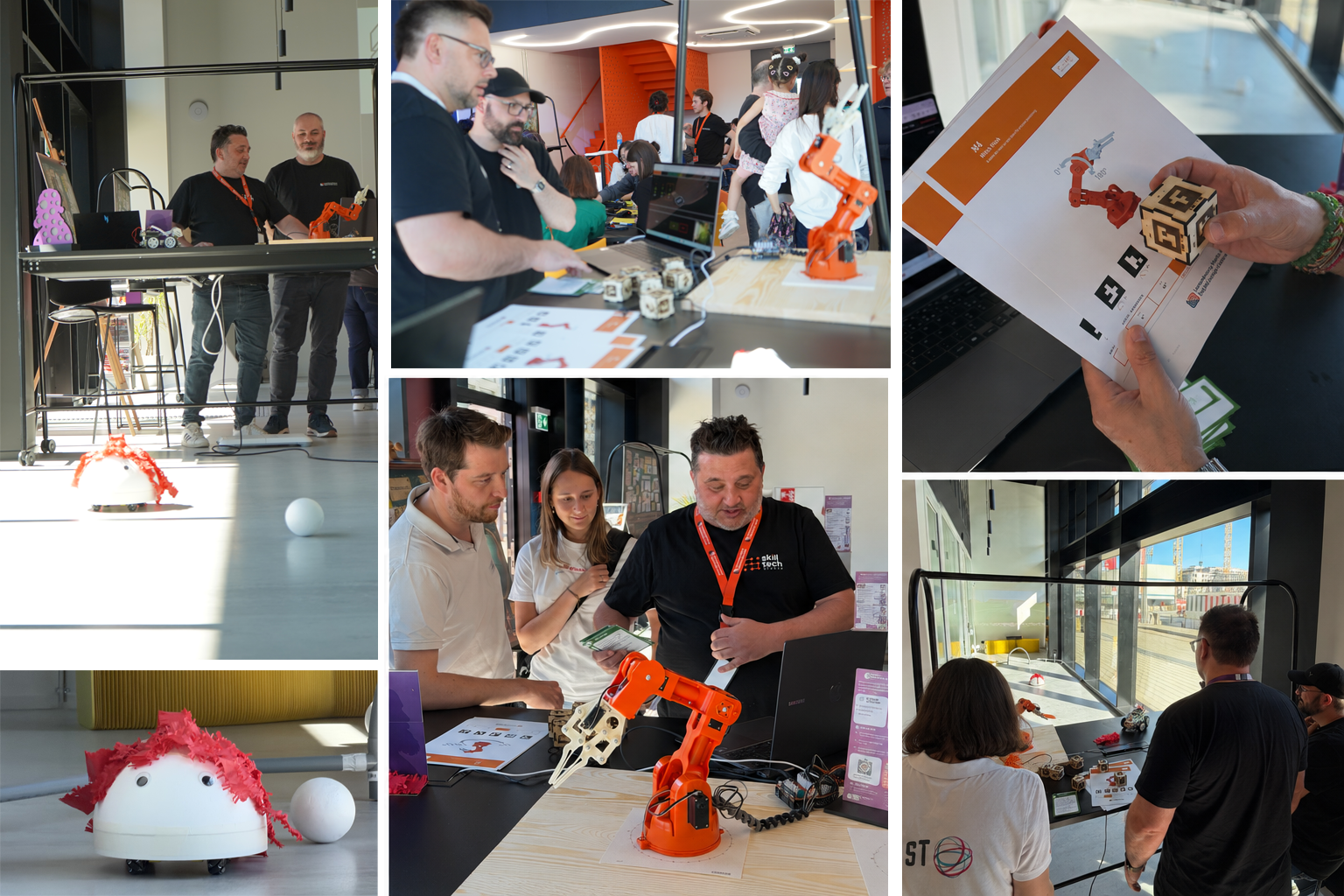
The “Thinking with Things” booth showcased logic, systems, and computational thinking through physical interaction and problem-solving activities. Inspired by Albert Einstein’s thought experiments and concrete reasoning, participants manipulated objects, tested patterns, and worked through challenges together, making abstract concepts feel much more tangible and approachable.
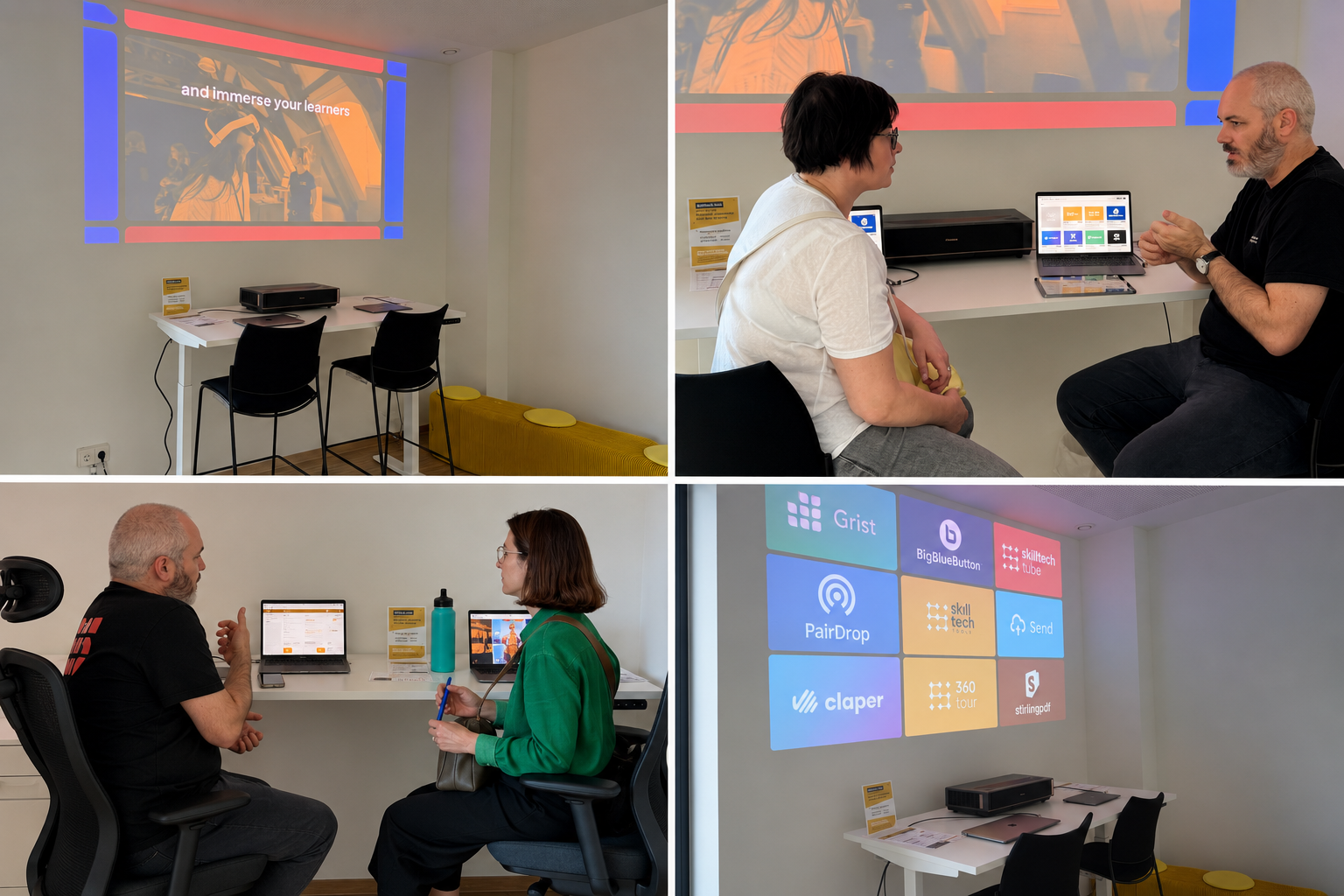
Alongside the activities, LMDDC also showcased Skilltech.tools , a free to use open toolbox to support teachers, trainers, and educational organizations in Luxembourg with open-source and sovereign educational technology solutions. The platform provides tools for multimedia content creation, online collaboration, virtual classrooms, AI-supported learning environments and more.
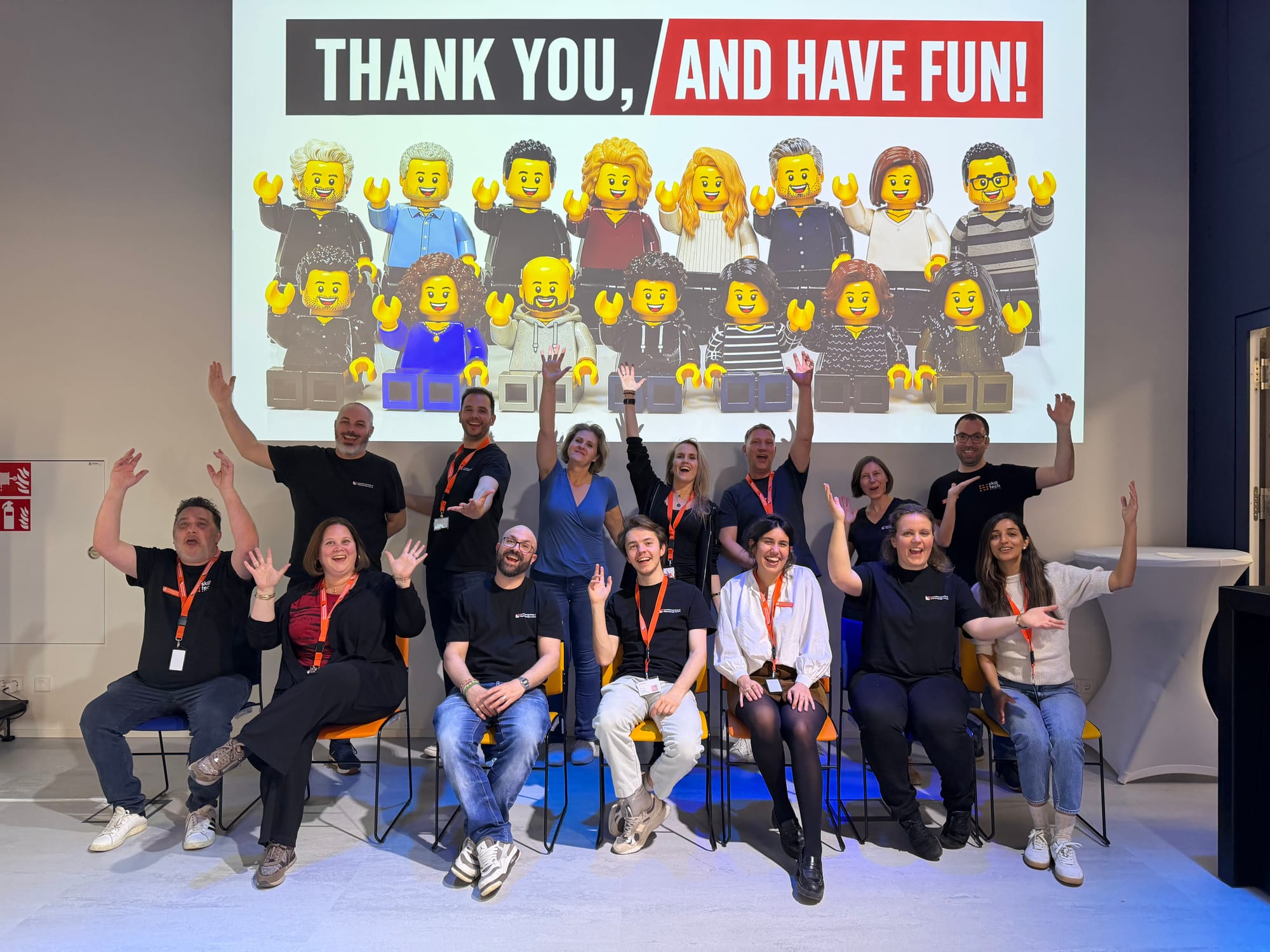
Honestly, going through all these pictures, it was really hard to choose what to share. Seeing so many smiling faces, moments of curiosity, excitement, discussions, experiments, and people discovering new things together truly shows what this event was about.
Because this should not remain a one-time experience, we are publishing all the activity blueprints so others can easily reproduce, adapt, and build on the format in their own classrooms, workshops, and learning spaces. Feel free to explore them, remix them, use them, and make them your own.
https://blueprints.skilltech.studio/
More than a showcase, the workshop became a shared space for experimentation, discussion, and discovery, where participants could exchange ideas, test activities, and explore together how physical and digital experiences can create more engaging, intuitive, and human learning experiences.
To everyone who joined us: thank you. Your energy and enthusiasm made this event something special, and we already cannot wait to see you again next time! 😊
Györgyi "Gira" Szakmár
Györgyi "Gira" Szakmár is our Multimedia Design Manager. She is passionate about game-based learning and an expert in gamification.