

Open Source Conference 2026: the LMDDC team looks back

Mathilde Noël
4 minutes read |

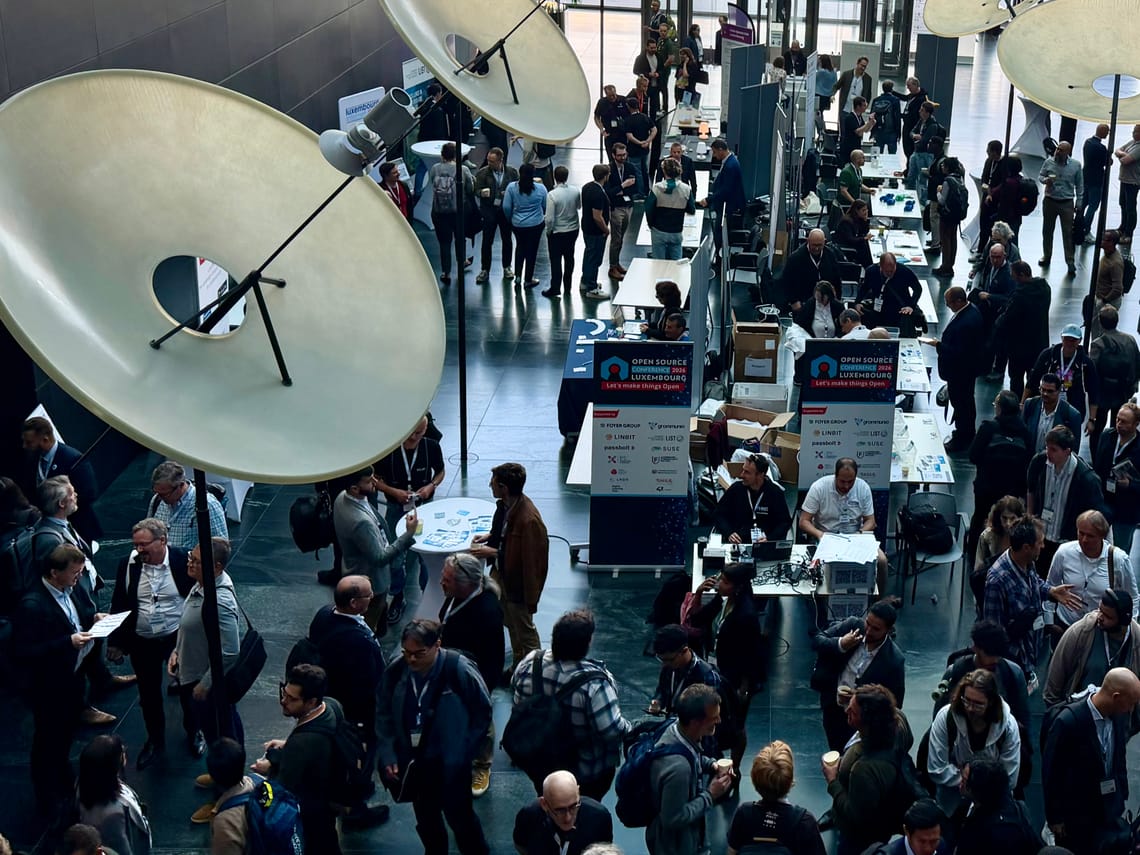
On 7 October, the Open Source Conference was held in Belval. LMDDC took part as co-organiser, with its EdTech Track and a booth dedicated to skilltech.tools. Few days later, the team looks back on its expectations, the day itself and the lessons it takes away.
Before the conference
At LMDDC, open source is a founding choice. Thibaud Latour, Director of LMDDC, sums it up:
“Everything we produce is open, and so is everything we use, from the server to the application. Because we are publicly funded, we would rather pay for local deployment and contribution development for the common good than for licences”
Co-organising the conference was therefore about carrying a simple message, without preaching: look, we did it, so why not you?
For many in the team, the story began early: a first Linux found at 13 on a magazine CD-ROM, a Windows XP too heavy for the family computer, a CD burned by an exhibitor at a trade fair. Others take a more pragmatic view: a free tool, yes, provided it performs as well as its proprietary counterparts. On that score, Blender wins unanimous support.
Our expectations were less about the community, already convinced, than about the wider public. In late 2022, LMDDC's choice to run entirely on open source still met with scepticism. This year, we wanted to see whether digital sovereignty, over health data, education data and our children's data, now resonated with a wider audience, and how the community is embracing AI.
On site
full rooms, a lively booth
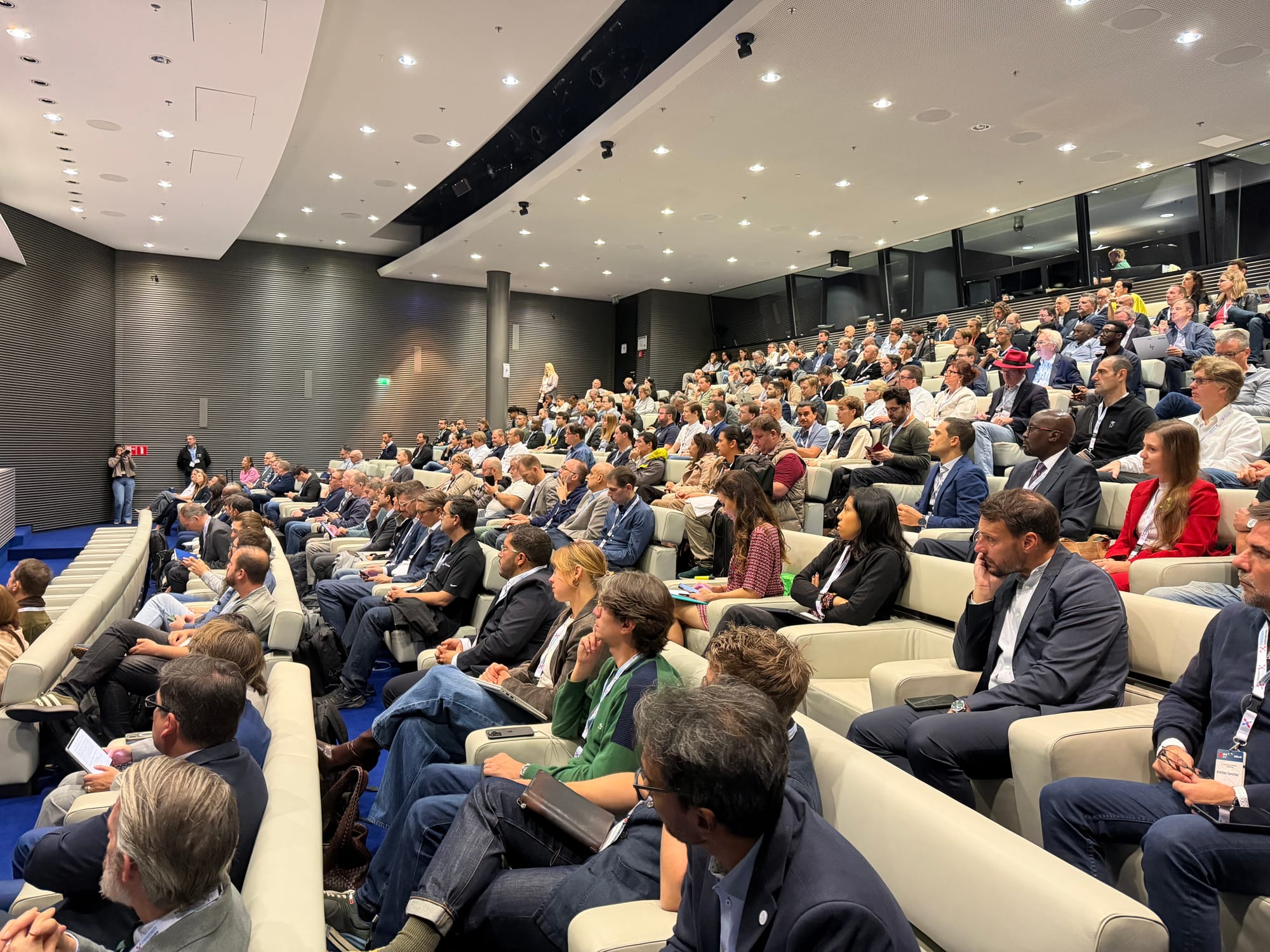
This edition drew a large audience, and the EdTech Track benefited fully: sessions were well attended throughout the day.
The atmosphere was both curious and down-to-earth. Discussions focused above all on hands-on experience: how each organisation had managed its transition, what obstacles it had faced, what solutions it had found. The audience reflected this diversity: decision-makers from Luxembourg institutions, teachers, volunteer project leads, representatives of UNESCO, and even a participant from Georgia who came to observe open source trends in Western Europe.
At the booth
The skilltech.tools booth became a real meeting point. Many visitors were discovering LMDDC and wanted to understand its mission and its tools. These spontaneous conversations with teachers, parents, institutions and fellow exhibitors brought concrete needs to light, which will feed into our next developments.
EdTech Track highlights
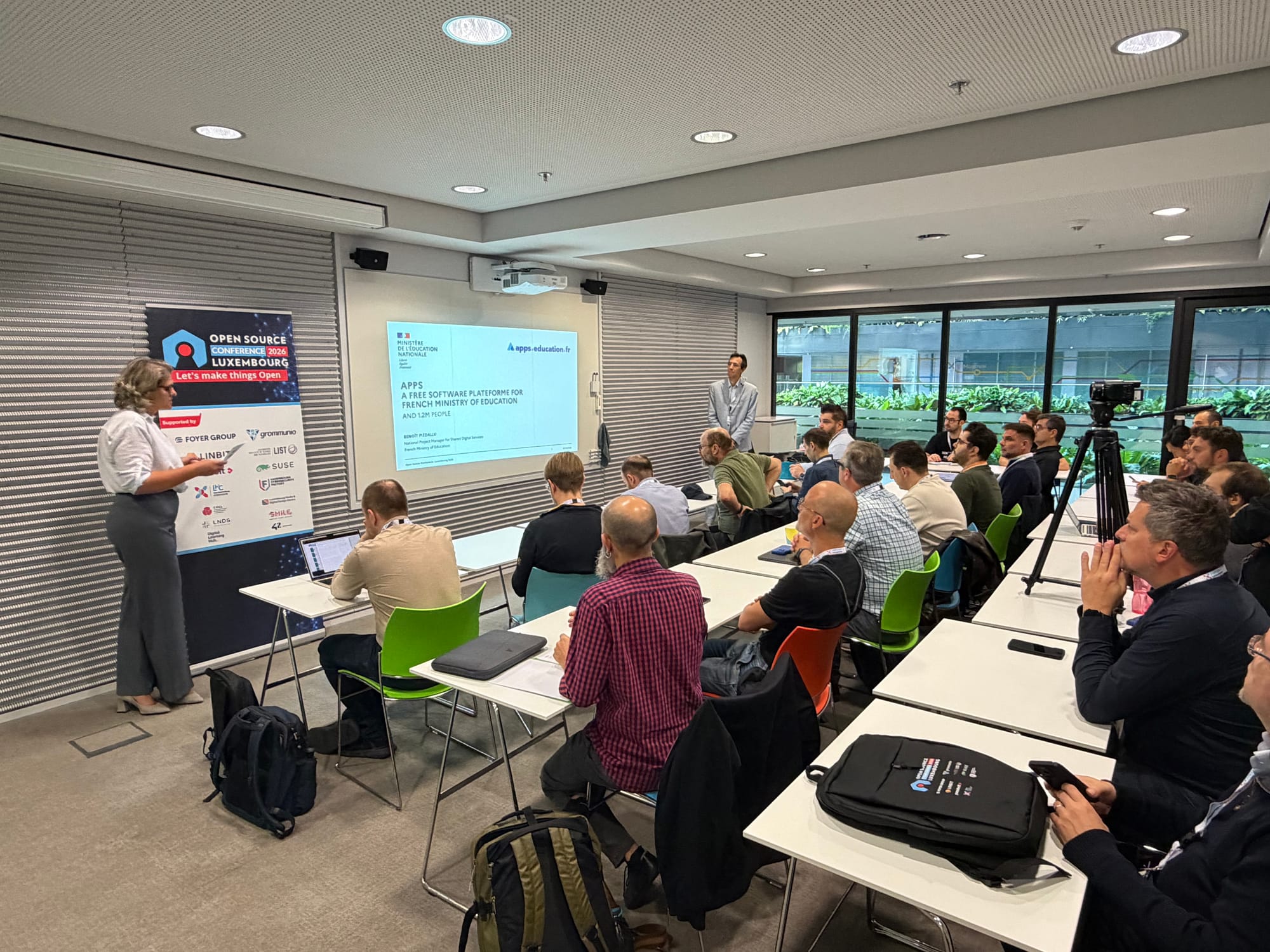
Eleven talks set the pace of the day, from classrooms to servers.
The morning focused on large-scale deployments. Larry Kilroy (DataKind) presented an open core alternative to siloed edtech tools, adopted by more than 100 institutions. Benoît Piédallu (French Ministry of Education) walked through apps.education.fr, a platform of free collaborative tools used by 1.2 million staff. Boris Baldassari (Eclipse Foundation, OSPO Alliance) shared practical advice on setting up an Open Source Program Office at a university.
The afternoon highlighted long-term public policies. Paolo Dongilli traced twenty years of the FUSS project in South Tyrol's schools, with figures to back it up: after a costly first year, licence savings now fund local jobs. Ingo Steuwer (Univention) presented SCHULE@BW, a sovereign digital workspace deployed in 2,700 schools. Sarra Hedhli introduced the Forge des communs numériques éducatifs, where teachers create and share their own tools, some of them used millions of times. An approach that raises a question for the future: how can AI help a teacher who does not code to design their own tools?
Emilien Sanchez (France Université Numérique) pointed out that free software alone cannot guarantee sovereignty without shared governance. Matthieu Guérin (French Ministry of Education) made the case for interoperability and common standards such as OneRoster.
The end of the day turned to infrastructure and AI. Cynthia Wagner and Denim Latić (Restena Foundation) looked back on twenty-six years of open source in support of data sovereignty and infrastructure resilience. Thibault Milan (Paperjam) gave a candid account of building AI solutions on open source models. Finally, Nathan Lenas (LMDDC) presented [AI]lice, our open source, self-hosted teaching chatbot.
One real debate: AI
Generative AI prompted the liveliest exchanges during audience questions, particularly around its use in the classroom. Between distrust of a black box and the urge to move faster, a consensus is emerging: not AI everywhere, never to replace teachers, and always with the safeguards open source has long championed.
Takeaways
what we take away
Open source is moving forward, and could move faster still. Interest is growing at every level, driven by the geopolitical context and by a European digital identity to which Luxembourg is strongly committed. The road ahead is still long, however, and vigilance is needed against open source washing: a solution presented as sovereign is not always so once you look at the infrastructure behind it.
The barriers, meanwhile, have not changed. Habit, first: when you have worked a certain way for thirty years, you do not change without good reason. Migration, second: bringing skills back in-house takes time, as the Restena Foundation found when it moved from VMware to Proxmox, before quickly recouping the cost. The ways forward: show the numbers, lead by example, report needs back to developers, and make tools more accessible, notably with AI.
This is where LMDDC finds its place. By mastering the entire chain, from hardware to software, we can act as a laboratory. We publish our projects as open source and sometimes fund community developers to add features that are then shared with everyone. A virtuous circle: open source gave us our culture, and we give back practice.
In a nutshell
the final word
At the end of the day, the team came away with a shared feeling:
“We are heading in the right direction.”
Want to get involved?
You don't need to be a developer: translating, testing or giving feedback on software such as GIMP are all valuable contributions. Start from your everyday needs, report the bugs you come across, attend events and don't hesitate to contact project leads: most are happy to talk about their work.
Couldn't make it?
All EdTech Track talks will be soon available on skilltech.tube. See you next year.
Thanks to Aurélien, Jimmy, Julien, Ludovic, Nathan, Pierre and Thibaud for their feedback.
Mathilde Noël
Mathilde is our Knowledge Dissemination Officer. She is passionate about communication, bringing creativity and fresh ideas to make knowledge accessible and engaging.